




The defence landscape of the Eastern Mediterranean and North Africa is undergoing a notable transformation as Turkey and Egypt formalise a $350 million defence cooperation package.
This agreement marks a transition from diplomatic reconciliation to a robust industrial partnership, focusing on both the direct export of advanced hardware and the establishment of local manufacturing capabilities.
By combining Turkish technical expertise with Egyptian industrial infrastructure, the deal positions Egypt as a primary manufacturing hub for military hardware intended for regional and continental distribution.
The agreement was finalized between Turkey’s state owned Mechanical and Chemical Industry Corporation, known as MKE, and the Egyptian Ministry of Defence. This framework military agreement emerged from high-level talks in Cairo between Turkish President Recep Tayyip Erdoğan and Egyptian President Abdel Fattah el-Sisi.
A central feature of the pact is the creation of a Joint Venture (JV) company designed to manage new production facilities and enhance the export potential of defence products across Africa and the Middle East, Military Africa reported.
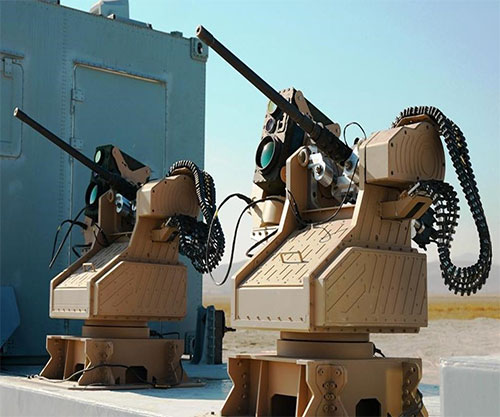
A substantial portion of the deal, valued at $130 million, involves the export of the Tolga short-range air defence system to Egypt. The Tolga system is a modular platform designed to detect, track, and neutralise a variety of aerial threats. It is specifically optimised to counter drones, low-flying aircraft, and emerging missile technologies, which have become central features of modern asymmetric warfare.
Technically, the Tolga provides an integrated framework that meshes command and control suites with radar and electro optical sensors. It incorporates electronic jamming capabilities alongside weapon systems of various calibres. This integration allows for a tiered response to incoming threats, utilizing specialized ammunition to maximize interception rates. This sale follows a similar export of the Tolga system to Qatar in early 2026, suggesting that Turkey is successfully standardising this platform among key regional partners.
Beyond the immediate acquisition of air defence systems, the remaining $220 million of the package is dedicated to industrial investments within Egypt. A primary objective is the construction of a 155mm long-range artillery ammunition factory. In the context of current global supply chain pressures and the high consumption rates of artillery in modern conventional conflicts, localising the production of 155mm shells provides Egypt with a critical strategic advantage and greater operational self-sufficiency.
The agreement also includes the establishment of production lines for 7.62mm and 12.7mm small arms ammunition. These facilities will not only supply the Egyptian Armed Forces but will also serve as a source for regional exports. By shifting from a traditional buyer-seller relationship to one defined by technology transfer and joint manufacturing, Turkey and Egypt are creating a more resilient defense industrial base that is less susceptible to external diplomatic pressures or logistics disruptions.
The momentum of this partnership is reflected in several supplementary agreements signed throughout 2025. In March 2025, the two nations entered a strategic agreement to produce advanced unmanned ground vehicles and unmanned aerial vehicles (UAVs) locally in Cairo. This was followed on August 27, 2025, by a partnership between the Turkish defence firm Havelsan and Egypt’s Arab Organisation for Industrialization.
This specific collaboration focuses on the production of autonomous UAVs, with a particular emphasis on vertical takeoff and landing (VTOL) models. Under the terms of the agreement, assembly and production occur in Egyptian facilities under Turkish technical guidance. These VTOL systems are increasingly favoured for naval operations and environments where traditional runways are unavailable, providing a flexible intelligence, surveillance, and reconnaissance (ISR) capability.
The industrial cooperation is mirrored by a resurgence in military-to-military engagement. In September 2025, the two militaries resumed joint naval and air exercises under the “Friendship Sea” operation. These drills involved Turkish frigates, submarines, and F-16 fighter jets operating in tandem with Egyptian naval forces. These exercises demonstrate a high level of interoperability and a mutual interest in securing maritime corridors in the Eastern Mediterranean and the Red Sea.
This strategic reset follows a decade of strained relations after 2013, with a formal normalisation process beginning in 2023 through the reappointment of ambassadors. The current alignment is driven by overlapping interests in regional stability, particularly regarding the security situations in Somalia and Sudan. Furthermore, both nations have expressed shared concerns regarding the humanitarian and security implications of the conflict in Gaza, which has accelerated the need for a unified regional stance.
Last year, Turkey gave the go-ahead for Egypt to join its ambitious fifth-generation KAAN fighter jet programme, marking a potential shift in Middle Eastern defence collaborations that could reshape air power dynamics in the region. In 2024, Turkey agreed to supply Egypt with its renowned drones as both Islamic nations seek to strengthen their diplomatic ties, which have been upgraded from normalisation to strategic.
Egypt’s Arab Organisation for Industrialisation (AOI) is positioning itself as a pivotal player in the global aerospace arena, with ambitious plans to establish a local production line for modern light combat and trainer aircraft. By partnering with Turkey, Egypt gains access to battle-proven technology and a partner willing to share industrial secrets, a combination that assists Cairo in its goal of becoming a preeminent defence manufacturing hub for the Arab world and the African continent.