




The latest Middle East war confirms what we already knew: the region is a strategic train wreck, but this time Europe has reacted in a way that is anything but business as usual. Between Washington and Tehran, missiles and shipping lanes, the European Union has chosen an uncomfortable but unmistakable line: this is not our war, and we will not be dragooned into it on command.
For once, European capitals have refused to simply absorb the shock, sign the communiqués, deploy the frigates and hope Trump’s temper moves on to the next target, Future Warfare Magazine www.fw-mag.com reported.
From Brussels to Berlin and Madrid, the message is consistent: maximum restraint, protection of civilians, and a cold insistence on international law and diplomacy over yet another open-ended regime-change adventure. The ASPIDES mission will not be re-hatched into a European auxiliary of a US-Israeli war against Iran, and EU foreign Ministers have ruled out changing its mandate simply because Washington has escalated.
Germany and Spain, in particular, have anchored the line: yes to sanctions and pressure on Tehran, no to the fantasy that more missiles will somehow deliver democracy in the Gulf. This is not moralistic pacifism; it is a calculation that Europe’s interests lie in containment, de-escalation and supply chain protection, not in setting fire to its own southern flank.
The most politically significant move, however, is Europe’s quiet but unmistakable “no” to President Trump. The US President has once again acted first and informed allies later (if at all), launching strikes with Israel that caught European governments off guard and exposed them to retaliation without consultation. Then, in classic fashion, he demanded help to unblock the Strait of Hormuz and escort tankers, all while brandishing tariff threats and using NATO as a rhetorical punching bag. This time, Europe did not simply swallow the humiliation. It pushed back on multiple fronts, from rejecting a rubber-stamp naval role in his war to coordinating counter-measures when Trump tried to weaponise trade over unrelated disputes.
That is the real novelty of this crisis: a continent that has long specialised in strategic hand-wringing has, almost in spite of itself, shown some backbone. It has said, in deeds more than words, that allies are not vassals, that consultation is not optional, and that European territory and infrastructure will not be turned into a logistics platform for adventures designed in Washington and Tel Aviv alone. Think-tanks in Brussels now spell it out with unusual bluntness: “keeping Donald Trump happy” on Iran in the hope of side-payments elsewhere is strategic lunacy. If he wants European support, he will have to treat Europeans as partners, not staff.
None of this changes the brutally obvious fact: strategically, Europe remains a group of secondary players in a crisis that will shape the continent’s security for decades. The European Union, the heaviest weight in political terms, is still improvising between energy insecurity, US pressure, Iranian threats and internal divisions over the use of force. Its instruments (maritime missions like ASPIDES, sanctions, diplomatic démarches) are limited, and its capacity to deter actors such as Iran or to constrain a US–Israeli war machine is marginal at best. Even now, European governments struggle to articulate a positive end-state for the region beyond the usual mantras of de-escalation and “return to negotiations.”
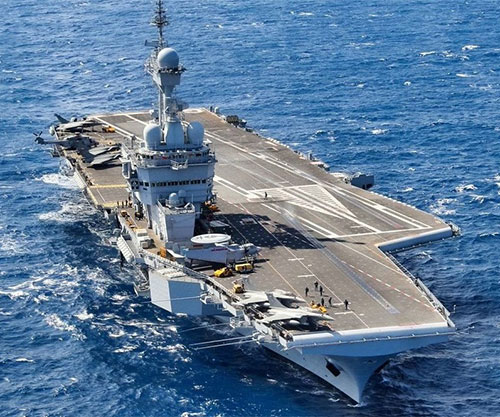
And yet, crises have a paradoxical virtue: they wake the sleeper. The Iranian war is forcing European leaders to connect the dots between maritime security in the Red Sea, energy flows through Hormuz, missile defence for the eastern Mediterranean, and the credibility of “strategic autonomy” as more than a slogan. NATO batteries intercepting Iranian missiles aimed at Turkey, French assets surging to the Gulf, Greek fighters and frigates redeployed around Cyprus represent the contours of a Europe that is starting to think and act like a security actor in its own neighbourhood, even as it refuses to sign up blindly to US wars.
Europe will remain, for now, a power constrained by fragmentation and dependency. But the way European countries handled this crisis - the refusal to be bounced into war, the pushback against Trump, the insistence on protecting their own interests first - suggests that the “great dormant” is at least stirring.
Now, if Europeans want to avoid fighting other people’s wars on their doorstep, they will have to keep waking up faster, more coherently, and with a clearer sense of what they are willing to defend and under what conditions. The Middle East is reminding Europe, brutally, that irrelevance is a choice, and that choosing otherwise starts with the simple act of saying “no.” (Marco Giulio Barone; Future Warfare Magazine; Photo: France’s Nuclear-Powered Aircraft Carrier Charles De Gaule Heading from Cyprus to the Middle East © X)