




The General Secretariat (Political Affairs Sector - Arms Control and Disarmament Department) convened in Cairo on 6-7 April for the “15th meeting of Arab National Points of Contact on the United Nations Programme of Action to Combat the Illicit Trade in Small Arms and Light Weapons”.
The meeting took place under the chairmanship of the Kingdom of Bahrain in its capacity as President of the 165th Ordinary Session of the Council of the League of Arab States at the Ministerial Level, the League said in a statement.
The meeting was held in preparation for the 9th Meeting of the United Nations Programme of Action, scheduled to take place in New York from 1 to 5 June. It will consider the main themes to be reflected in the draft outcome document of the conference and prepare a statement on behalf of the Arab Group to be delivered at the UN meeting, in line with relevant regional and international developments in this field.
The meeting will also review developments related to the joint project between the League of Arab States and the European Union on “Combating Illicit Trafficking and Proliferation of Small Arms and Light Weapons in the Member States of the League of Arab States,” which is being implemented in cooperation with the project’s implementing partners (Interpol, the World Customs Organisation, and the Small Arms Survey), with an estimated budget of €13 million across its three phases (2019-2027).
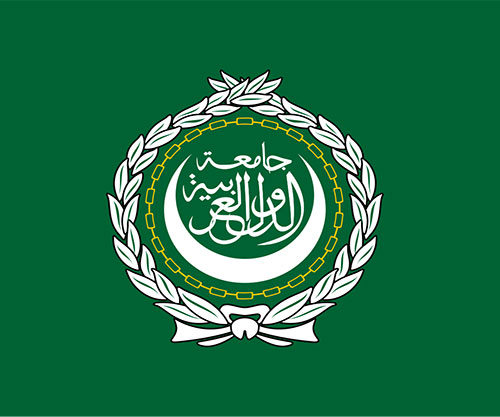
The League of Arab States is a regional organization in the Arab world. It was formed in Cairo on 22 March 1945, initially with seven members: Egypt, Iraq, Transjordan, Lebanon, Saudi Arabia, Syria, and North Yemen. Currently, the League has 22 member states, including (by alphabetic order): Algeria, Bahrain, Comoros, Djibouti, Egypt, Iraq, Jordan, Kuwait, Lebanon, Libya, Mauritania, Morocco, Oman, Palestine, Qatar, Saudi Arabia, Somalia, Sudan, Syria, Tunisia, United Arab Emirates, and Yemen.
The League’s main goal is to “draw closer the relations between member states and co-ordinate collaboration between them, to safeguard their independence and sovereignty, and to consider in a general way the affairs and interests of the Arab countries”. The organization has received a relatively low level of cooperation throughout its history.
Through institutions, notably the Arab League Educational, Cultural and Scientific Organization (ALECSO) and the Economic and Social Council of its Council of Arab Economic Unity (CAEU), the League facilitates political, economic, cultural, scientific, and social programmes designed to promote the interests of the Arab world.
The League has also served as a forum for the member states to coordinate policy, arrange studies of and committees as to matters of common concern, settle inter-state disputes and limit conflicts such as the 1958 Lebanon crisis. The League has served as a platform for the drafting and conclusion of many landmark documents promoting economic integration. One example is the Joint Arab Economic Action Charter, which outlines the principles for economic activities in the region.
Each member state has one vote in the Council of the Arab League, and decisions are binding only for those states that have voted for them.
In March 2015, the Arab League General Secretary announced the establishment of a Joint Arab Force with the aim of counteracting extremism and other threats to the Arab States. The decision was reached while Operation Decisive Storm was intensifying in Yemen. Participation in the project is voluntary, and the Army intervenes only at the request of one of the member states. (League of Arab States; Wikipedia)