





Major new procurements were announced at the NATO Summit Defence Industry Forum on Tuesday (7 July 2026) which will boost defence production and innovation across the Alliance, and provide new capabilities to strengthen NATO’s deterrence and defence.
The Forum brought together Allied Ministers, senior officials, and representatives from over 100 companies to translate the defence investment commitments made in The Hague last year into concrete capabilities and industrial output, NATO said in a statement.
“The money is there, and more is coming,” Mark Rutte, NATO’s Secretary General, said, while calling on governments and industry to “do more, faster, together.”
The new announcements included:
- A coalition of 12 countries, led by the UK, is launching a more than £37 billion ($50 billion/€43 billion) programme to develop a new long-range precision missile system aimed at strengthening NATO’s defenses against emerging threats across Europe.
- NATO allies have pledged to invest more than $40 billion (€35 billion) in counter-drone capabilities over the next five years and to increase the number of trained drone operators fivefold by the end of 2027. NATO will also launch a counter-drone marketplace to speed up procurement by ensuring approved systems are tested, compatible with alliance standards and readily available for purchase.
- Nine allies will work together to develop a prototype for a generic NATO 155mm munition, as announced in Ankara. The allies are Canada, Czechia, Denmark, Finland, Greece, Norway, Slovakia, Sweden and Turkey for a total value of $1.6 billion (€1.4 billion).
- Six allies (Denmark, France, Italy, Norway, Turkey, and the United Kingdom) also launched NATO’s multinational Ground-Based Precision Strike Capabilities High Visibility Project to explore the development of novel deep precision strike capabilities, including new launchers and missiles.
- Swedish aircraft-maker Saab is to build up to 10 GlobalEye early-warning and surveillance aircraft to replace the ageing Boeing E-3 Sentry AWACS fleet. The deal will be signed by Belgium, Canada, Denmark, Germany, Latvia, Lithuania, Luxembourg, the Netherlands, Norway, and Romania.
- Belgium, Croatia, France, Poland, Spain, Turkey and the United Kingdom launched a new multinational High Visibility Project for a fleet of Airbus A400M military aircraft. The seven allies will share costs and pool the aircraft, which is capable of carrying strategic loads and delivering them to unprepared airfields.
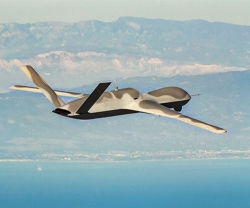
- Additionally, Denmark, Finland, Germany and Norway announced the procurement of up to five Northrop Grumman MQ-4C Triton high-end, high-altitude and long-endurance uncrewed aircraft. This is to enhance NATO’s Intelligence, Surveillance and Reconnaissance (ISR) Force.
- Four different space initiatives, including an eight-nation effort by Canada, Denmark, Finland, Germany, Norway, the Netherlands, Sweden and Turkey to explore a shared military satellite constellation to improve communications, intelligence sharing and missile tracking.
- Separately, Spain joined NATO’s Alliance Persistent Surveillance from Space (APSS), Canada became the 15th member of the STARLIFT space launch initiative, and Turkey announced plans to develop new Earth observation and military communications satellites.
- Lockheed Martin announced two new European missile initiatives including a Memorandum of Understanding with Rheinmetall to establish what the companies describe as Europe’s first manufacturing, integration and distribution hub for the ATACMS tactical missile system at Unterlüß, Germany, subject to approvals.
- Separately, the US, Germany, the Netherlands, Poland and Sweden have agreed to explore establishing a European maintenance facility for PAC-3 Missile Segment Enhancement and Cost Reduction Initiative interceptors. (NATO; Agencies; Photo © NATO)