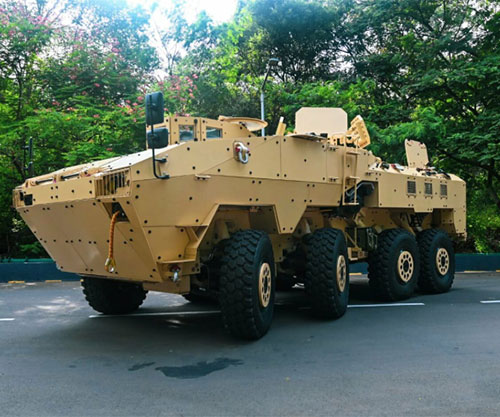





Morocco has produced the first 20 hulls of the Indian-designed Wheeled Armoured Platform (WhAP) 8×8 at a new facility in Berrechid, marking the start of local assembly for the Royal Moroccan Armed Forces.
The production milestone follows a September 2024 agreement between the Moroccan government and Tata Advanced Systems to supply 150 vehicles. Local subsidiary Metlonics Morocco confirmed the completion of the 20 hulls in March 2026.
This progress aligns with a timeline that saw the first five finished units delivered to the Royal Moroccan Army on December 24, 2025, according to Moroccan media.
The project is centered at a 20,000 square meter plant in the Casablanca industrial zone. This facility opened in September 2025, roughly three months earlier than the original schedule. The plant currently handles 35 percent of the production process. Officials expect this to rise to 50 percent as local technicians gain experience and the supply chain matures, Military Africa reported.
The Berrechid plant is the first defense manufacturing site established by an Indian company in Africa. It currently provides 90 direct jobs and supports 250 indirect positions through regional subcontractors. To ensure the project succeeds, the Moroccan government provided a package of financial, fiscal, and customs incentives. These measures aim to turn the kingdom into a regional hub for armored vehicle manufacturing.
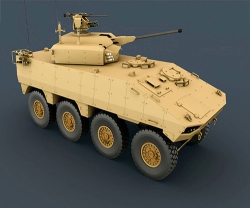
The WhAP, also known as the Tata Kestrel, is an eight-wheeled amphibious platform developed alongside India’s Defence Research and Development Organisation. It weighs 24 tons and utilizes a modular design to fill various roles, from troop transport to reconnaissance. The vehicle features a 600 hp Cummins ISX engine and an Allison 4500SP automatic transmission, allowing for a top road speed of 100 km/h.
Protection levels for the WhAP are customizable. The base steel armor meets STANAG 4569 standards, offering ballistic protection from Level 1 to Level 4 based on mission requirements. Its mine resistance is rated at Level 3. For water operations, the vehicle uses rear-mounted water jets to swim at speeds up to 10 km/h.
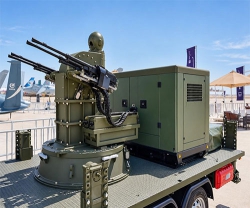
The Moroccan variants can be equipped with various weapon systems. Options include remotely controlled modules for machine guns or 30 mm automatic cannons. Some configurations integrate the turret from the BMP-2 infantry fighting vehicle, which carries a 2A42 small-caliber gun. The platform accommodates a crew of three and can carry nine infantry soldiers in the rear compartment.
Morocco began evaluating the WhAP as early as 2022 to replace its aging fleet of light armored vehicles. The current procurement is a key part of a broader force modernization strategy. By building the vehicles locally, the Moroccan military reduces its reliance on direct imports and simplifies long-term maintenance and logistics.
The rapid stand-up of the Casablanca facility suggests a high level of cooperation between Tata and the Moroccan Ministry of Industry. The plant is expected to reach a maximum output of 100 units per year once all production lines are fully operational. This capacity would allow Morocco to complete its initial order quickly and potentially pursue export contracts within the African market.
The success of the WhAP program likely paves the way for further industrial partnerships between Rabat and New Delhi. As the first 20 hulls move toward final assembly, the Royal Moroccan Army will focus on integrating these platforms into its active brigades. Continued testing throughout 2026 will determine if the locally produced units meet the specific environmental demands of North African operations.