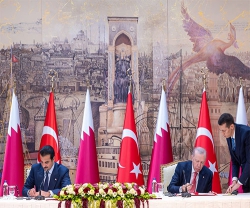
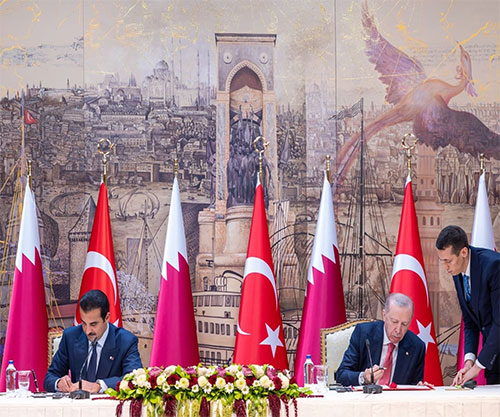





H.H. Sheikh Tamim bin Hamad Al Thani, Amir of the State of Qatar, and President Recep Tayyip Erdogan of the Republic of Turkiye have signed in Istanbul a joint defence agreement aimed at strengthening military cooperation between the State of Qatar and the Republic of Turkiye.
The agreement was signed on Friday at Dolmabahce Palace where the two leaders also witnessed the exchange of several agreements and memoranda of understanding covering consumer protection, market monitoring, education, and cooperation in peacebuilding, reconciliation and conflict resolution.
The joint statement issued at the conclusion of the session reaffirmed the two countries’ goal to increase the volume of trade to US$5 billion in the near future. It noted that Turkish contracting firms have executed 206 projects in Qatar, valued at $20.8 billion.
Furthermore, an agreement was reached to strengthen partnerships in several key areas: the defence industry - facilitated by the multilateral Badr Memorandum -liquefied natural gas (LNG) trade, space technologies (through the Es’hail-3/Türksat-Biruni satellite project), artificial intelligence, quantum computing, cybersecurity, and data protection.
Cooperation will also extend to the sectors of culture, health, youth and sports, labor, the environment, family affairs, and counter-terrorism.
It was also agreed that the 13th session of the Supreme Strategic Committee will be held in Doha in 2027, Turkish media reported.
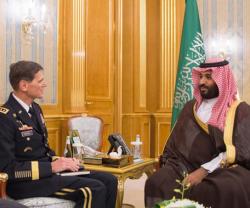
Meanwhile, a law approving Türkiye’s ratification of a joint defense pact with Saudi Arabia and Pakistan took effect on November 14, following its publication in the Official Gazette.
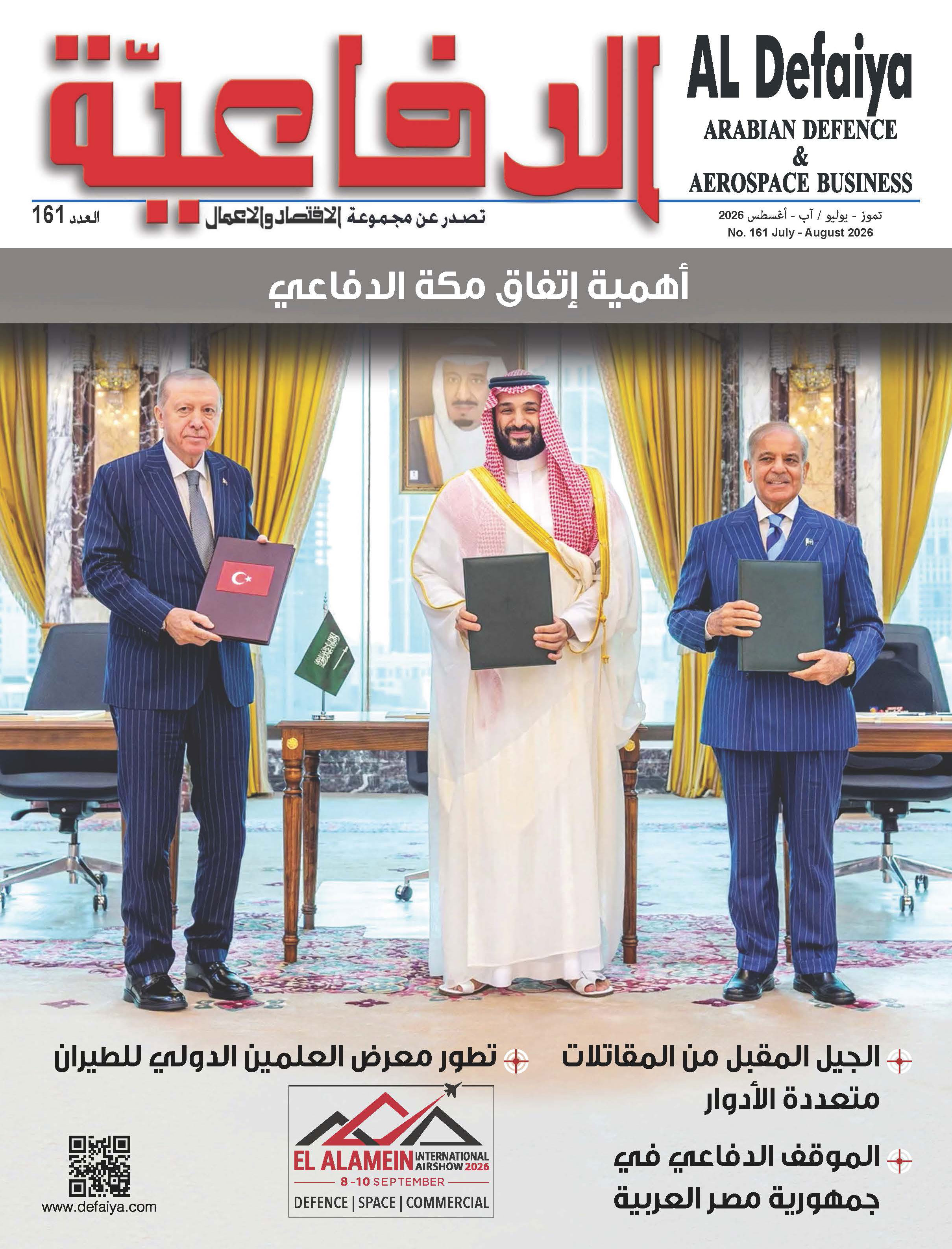
The Mecca Joint Defense Agreement, signed in the Saudi city on August 7, treats an external armed attack on one of the three countries as an attack on all.
The Turkish Parliament approved the law on November 5 by 279 votes to 119.
The agreement stipulates that it enters into force when the last instrument of ratification is deposited with its Secretariat.
Turkish Deputy Foreign Minister Levent Gümrükçü told a parliamentary committee on October 27 that Saudi Arabia and Pakistan had completed their domestic approval procedures and formally notified the other parties, Hurriyet Daily News reported.
Under the collective defense provision, members pledge immediate assistance to a country facing an armed attack or military aggression.
The scope and nature of that assistance, including military capabilities, would be determined following an assessment of needs and available means.
The explanatory memorandum submitted to parliament says the provision would not operate automatically.
Decisions would require consultation and agreement, with each country acting in accordance with its constitution, national legislation and decisions by its competent authorities.
The pact also preserves the countries’ rights and obligations under existing international agreements.
During the parliamentary debate, Defense Committee chair Hulusi Akar said it complemented Türkiye’s NATO membership and that any deployment of Turkish troops would require parliament’s permission.
Alongside collective defense, the agreement covers joint production, technology sharing and research and development in the defense industry.
It envisages cooperation between manufacturers and research institutions, including training specialist personnel and exchanging technical expertise.
Military cooperation would include personnel exchanges, joint training and exercises to improve the ability of the three countries’ armed forces to operate together.
The pact also calls for closer counterterrorism cooperation, including at the operational level.