




In an address to members of the United Kingdom Parliament in London on Tuesday, Ukraine’s President Volodymyr Zelenskyy said 201 Ukrainian anti-drone experts are in the Gulf region and another 34 “are ready to deploy.”
“These are military experts, experts who know how to help, how to defend against Shahed drones,” Zelenskyy said in his speech, referring to the Iranian-designed “kamikaze” drones that Russia has been using in its war against Ukraine since 2022.
“Our teams are already in the Emirates, Qatar, Saudi Arabia, and on the way to Kuwait. We are working with several other countries - agreements are already in place,” he added, ALJAZEERA news channel reported.
Last week, the Ukrainian leader said military teams had been sent to several Gulf states and Jordan.
Zelenskyy, who met with UK Prime Minister Keir Starmer and NATO Chief Mark Rutte earlier on Tuesday, said Russia had received the Shahed-136 drones from the Iranians, who had “taught Russia how to launch them and gave it the technology to produce them”.
“Russia then upgraded them. And now we have clear evidence that Iranian Shaheds used in the region contain Russian components,” Zelenskyy said, describing the drones as designed for “low-cost destruction of expensive critical infrastructure”.
The Ukrainian leader then addressed his country’s newly developed prowess in drone warfare and manufacturing, claiming that 90% of Russian losses on the front lines in Ukraine are being “caused by our drones”.
Ukraine has moved on from making sea and aerial drones to producing interceptors that target drones, he said, adding that Ukraine is capable of producing at least 2,000 interceptors per day - half of which are required for its own defence and the remainder available for use by Kyiv’s allies.
“If a Shahed needs to be stopped in the Emirates - we can do it. If it needs to be stopped in Europe or the United Kingdom - we can do it. It is a matter of technology, investment, and cooperation,” he said.
While Ukraine has become one of the world’s leading producers of sophisticated, battlefield-proven drone interceptors, US President Donald Trump has said he does not need Ukraine’s help with countering Tehran’s drones targeting military targets in the Middle East.
During Zelenskyy’s visit on Tuesday, London and Kyiv signed a deal on a “defence partnership”, which is said to combine “Ukraine’s expertise and the UK’s industrial base to manufacture and supply drones and innovative capabilities”.
Meantime, Wild Hornets of Ukraine has said that Middle East clients have expressed interest in its interceptors, but that it is not directly negotiating any export contracts before getting a green light from Ukraine’s government.
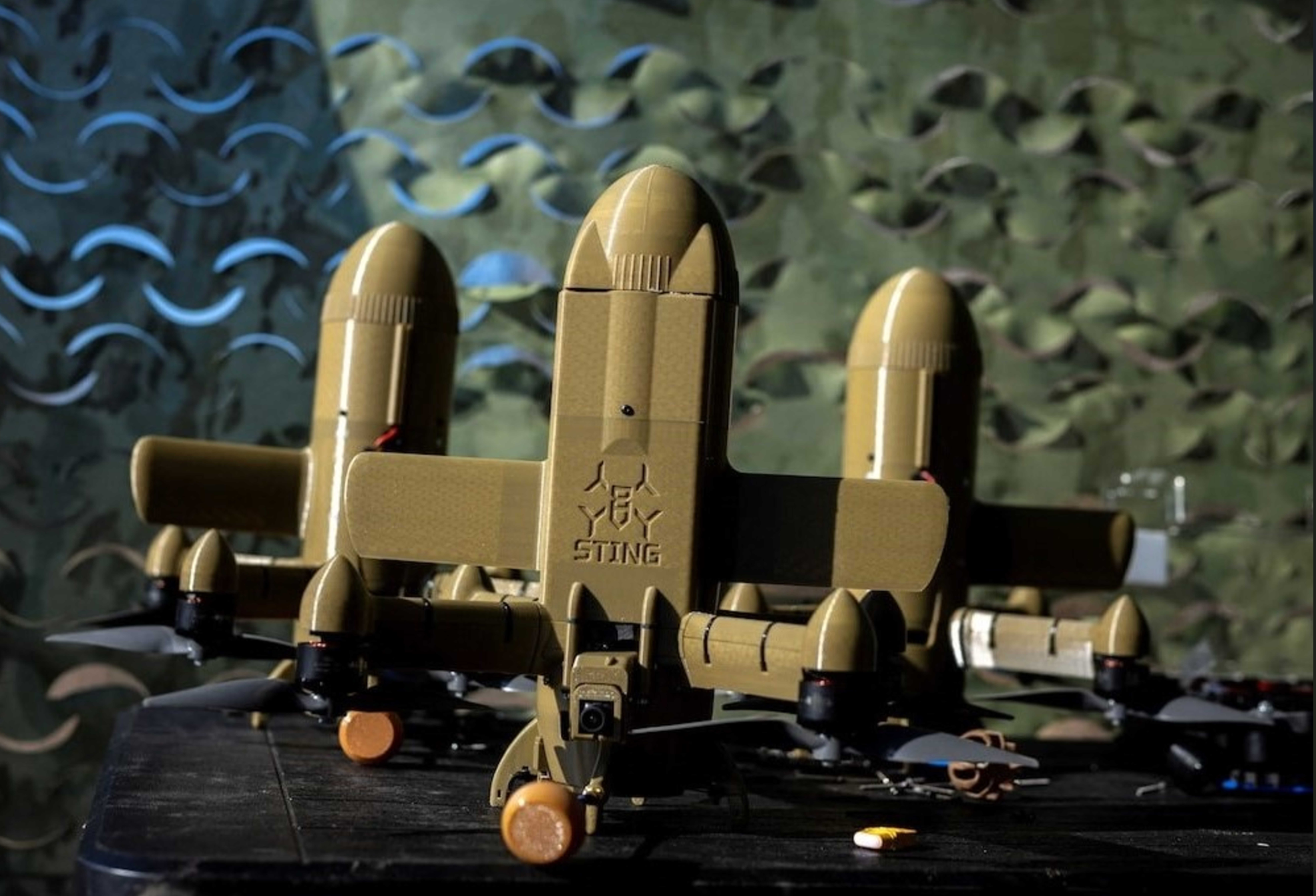
Interceptors like the STING (photo) are a low-cost alternative to multi-million-dollar U.S. Patriot air-defence missiles, capable of swooping in on lumbering Russian-made versions of the Shahed with overpowering speed, Reuters reported.
The STING flies at up to 280 km (174 miles) per hour, supported by a 360-degree antenna and a maximum flight range of around 37 km - a combination allowing it to chase down drones from a distance before crashing into them with explosives.
Controls are easily adaptable for pilots of the first-person-view drones (FPV) that are now commonplace, said Paskudnyk, a former furniture builder who aids Ukrainian pilots in the field.
“If you already know how to fly an FPV drone, then moving to this device is a matter of three or four days,” he said.
The STING has downed more than 3,000 Russian Shaheds since entering regular service in June 2025, the company said. More than 10,000 units roll off the production line monthly.
They cost around $2,000 or less - compared to the Shahed’s $20,000-$50,000 - and are purchased through the government’s defence-tech incubator or prominent private charities.
A second-generation model has already been developed to fly even faster and target the jet-powered Shaheds which Russia is continuously developing, according to a company representative who asked not to be identified for security purposes.
He said it had already been deployed in defensive operations, but that its technical specifications were being kept secret. (ALJAZEERA; Reuters; Photo: STING Drone Interceptor © Wild Hornets)