




Air power no longer comes only in the form of fighter jets streaking across radar screens. Today’s threats are faster, stealthier, and far more complex -ranging from hypersonic glide vehicles and maneuvering ballistic missiles to swarms of armed drones and low-flying cruise missiles.
Across the world, major military powers are pouring resources into air defense not just to protect airspace, but to safeguard cities, nuclear forces, and critical infrastructure.
Below is a ranked look at the top five air defense powers in the world:
1. United States:
It leads the world in air defense with advanced systems like Patriot PAC-3, THAAD, and Aegis. These can intercept a wide range of threats over long distances. It is also developing technologies to counter hypersonic missiles and uses space-based sensors to strengthen its defense network.
2. Russia:
Russia is a leading force in air defense, with powerful systems like the S-400 and advanced S-500. These can intercept targets at long ranges and high altitudes. Its extensive radar network also provides strong coverage across its vast territory.
3. China:
China has developed a large, modern air-defense network led by systems like the HQ-9 and HQ-22. With advanced radar and command systems, it safeguards key regions such as the South China Sea and East China Sea. China is rapidly advancing and closing the technology gap with Western powers.
4. Israel:
Israel is known for its highly effective air-defense network proven in real conflicts. Systems like Iron Dome, David’s Sling, and Arrow defend against short-, medium-, and long-range threats, intercepting thousands of rockets and missiles with remarkable accuracy.
5. India:
India has built one of Asia’s strongest air-defense networks, combining the S-400 with indigenous systems like Akash and Barak-8. Following Operation Sindoor, which highlighted effective threat detection and response, India has accelerated its defense development. It is now advancing long-range missile systems and a homegrown missile defense shield, strengthening its position as a leading air-defense power.
Others:
France, United Kingdom, Japan, and South Korea: Other nations also maintain strong air-defense networks.
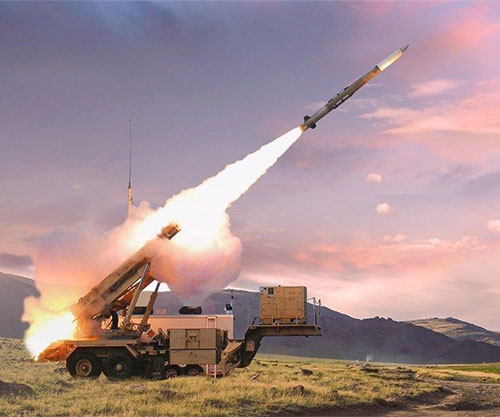
France relies on the SAMP/T Aster, while the United Kingdom uses Sea Viper and contributes to NATO missile defense. Japan deploys Patriot PAC-3 and Aegis, while South Korea is developing its Korean Air and Missile Defense network. Each has robust systems to protect their regions effectively. (News18.com; File Photo: PAC-3 Air Defense System © Lockheed Martin)