





The Global Airport Leaders’ Forum (GALF) highlighted the future of airport design, development and rapidly evolving technological innovations aimed at enhancing the passenger experience, making travel easier, smoother and more accessible to all.
The 13th edition of the Forum, held alongside the 25th Airport Show at Dubai World Trade Centre, brought together government officials, industry experts and representatives of companies operating across the aviation sector.
H.E. Eng. Khalifa Al Zaffin, Executive Chairman of Dubai Aviation City Corporation and Dubai South, emphasised that Dubai’s ambition to build the world’s largest airport goes beyond infrastructure size and passenger capacity. Rather, it centres on delivering the best possible passenger experience.
Al Zaffin said the Airport Show provides a valuable platform that brings together airport developers and companies specialising in technology and operational solutions, enabling them to exchange expertise and ideas while exploring the latest innovations firsthand.
Reflecting on the exhibition’s beginnings 25 years ago, he recalled that the idea emerged from the need to bring airport technologies together under one roof, eliminating the need to travel to different countries to explore them and creating benefits for Dubai and the wider region.
Three Priorities for the Future of Airports
Majed Al Joker, Chief Operating Officer of Dubai Airports, identified three key priorities for the future of the aviation sector: collaboration, operational resilience and innovation. He emphasised that passengers experience their journey through an airport as one continuous process rather than a series of separate services and procedures.
Al Joker explained that increasing airport capacity and improving service standards depend on the ability of stakeholders across the airport ecosystem to coordinate their efforts, align their objectives and build mutual trust.
He noted that collaboration becomes particularly critical during operational disruptions, when an effective response depends on relationships and capabilities established in advance, supported by clear leadership, teamwork and lessons learned from previous experiences to strengthen future preparedness.
Al Joker highlighted that intelligent systems enable airports to anticipate challenges and address them before passengers experience their impact. However, he stressed that investment in technology must serve a clear purpose: delivering smoother, more reliable and less complicated journeys.
He also emphasised that preparing the workforce for the future is as important as developing infrastructure, as employees’ expertise, decision-making abilities and commitment to passenger care are what transform technological capabilities into tangible results.
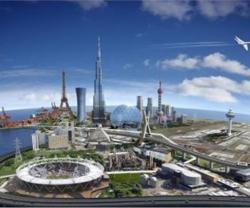
‘City Terminal’ Redefines Airport Boundaries
Abdullah Al Shamsi, Senior Manager of Future of Things at Dubai Aviation Engineering Projects (DAEP), presented a vision for airport innovation by 2032, in which technology operates seamlessly behind the scenes to simplify the passenger journey without introducing additional procedures or complexity.
He explained that the most advanced airport may not necessarily be the one where passengers encounter the greatest amount of technology, but rather the one where technology is least noticeable.
This approach relies on the integration of artificial intelligence, digital identity, biometrics and real-time data analytics to anticipate congestion, optimise resource allocation and provide personalised information and assistance according to each passenger’s needs.
Building an Airport Ready for the Future
Al Shamsi emphasised that the Al Maktoum International Airport project presents a unique opportunity to rethink airport design and operations from the outset by integrating infrastructure, technology and passenger experience within a unified vision, rather than adding technological solutions to existing facilities and processes.
He explained that preparing for the future does not mean predicting every innovation that may emerge. Instead, it means creating an airport with the flexibility to accommodate new technologies and operating models while adapting to continuously evolving passenger expectations.
Strengthening Connectivity
Khalid Ibrahim Saif, Director of Aviation Economics and Growth at the Dubai Civil Aviation Authority (DCAA), highlighted the importance of moving beyond a focus on managing operational disruptions towards adopting a broader vision that supports sustainable growth and strengthens connectivity across the aviation ecosystem.
He explained that continued growth in air travel requires aligning economic expansion with infrastructure development and greater operational efficiency. He also stressed the importance of strengthening integration between airports, airlines and regulatory authorities, while leveraging smart technologies and data to build a more resilient aviation ecosystem capable of adapting to future developments.